 By Henry Joseph
 The Tundra Food Web is a network of living things that depend on each other to survive. In the tundra, life is tough because the weather is cold and the growing season is short. Yet, plants and animals still find ways to live and thrive. We will explore the arctic tundra food web, alpine tundra food web, and even the antarctic tundra food web. You’ll also learn about tundra food web diagrams, examples, and the role of each organism. Let’s jump in and discover how life works in one of Earth’s most extreme habitats!
What Is a Tundra Food Web?
A tundra food web shows how plants and animals connect through eating and being eaten. In the tundra, the food web is simple because there are fewer plants and animals than in forests or oceans. Still, every organism plays a key role. Plants like mosses and lichens start the web by making food from sunlight. Herbivores eat the plants, and predators eat the herbivores. Even decomposers help by breaking down dead plants and animals. This process recycles nutrients back into the soil.
Arctic Tundra Food Web: How It Works
The arctic tundra food web is found in the far north, like Alaska and Siberia. Here, winters are long and harsh, but many animals survive by adapting. Plants grow quickly during summer. Animals like caribou, arctic hares, and lemmings eat these plants. Predators such as arctic foxes, wolves, and snowy owls hunt the herbivores. This creates a chain of energy that keeps the ecosystem alive.
Alpine Tundra Food Web: High Mountain Life
The alpine tundra food web is found high in mountains, above the tree line. The air is thin and cold, but life still exists. Small plants like grasses and wildflowers grow here. Animals like mountain goats and pikas eat the plants. Predators like eagles and wolves hunt these herbivores. This food web is similar to the arctic tundra but happens at high altitude instead of the far north.
Simple Tundra Food Web – Easy to Understand
A simple tundra food web includes only a few plants and animals. For example:
- Producers: Moss, lichen, grasses
- Herbivores: Lemmings, caribou
- Predators: Arctic fox, snowy owl
Even though it looks simple, it is strong and balanced. If one species disappears, the whole web can change.
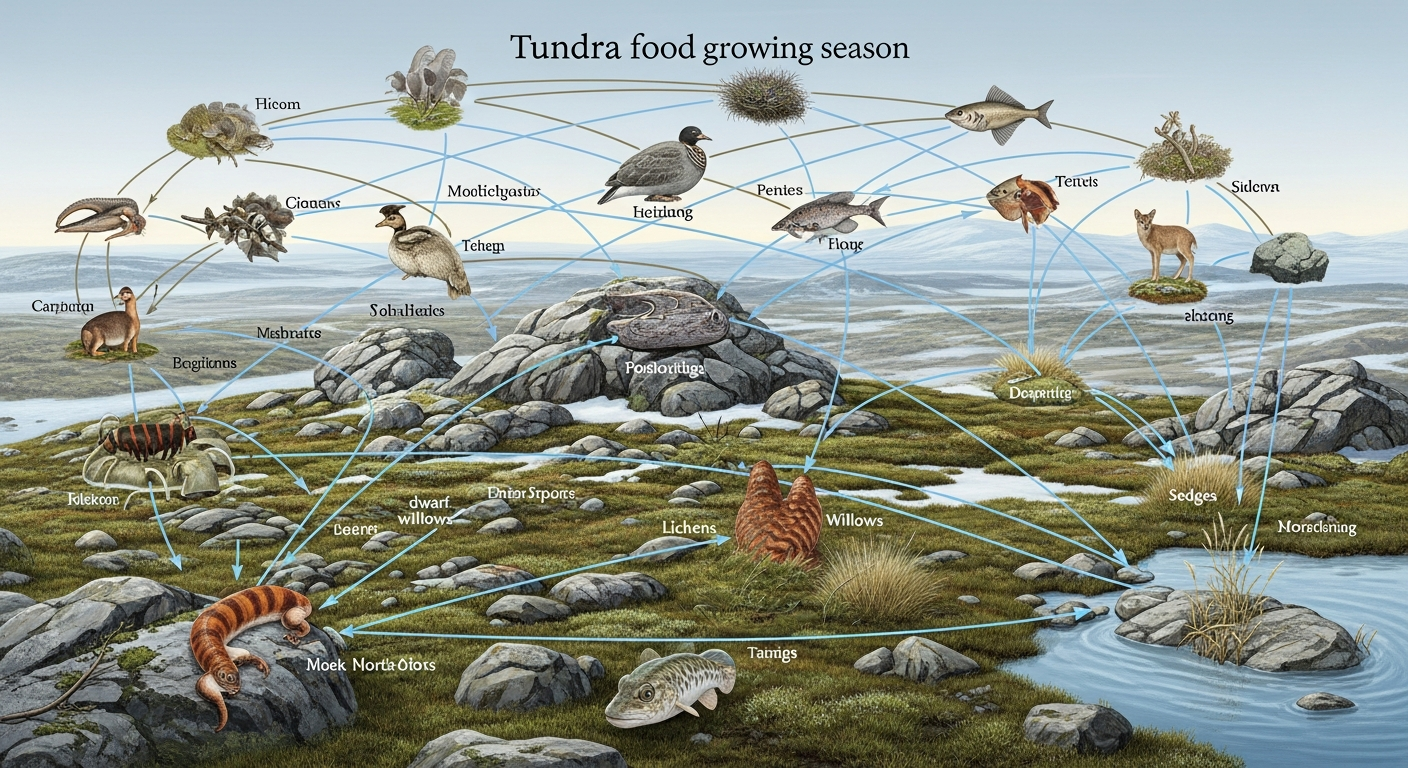
Tundra Food Web Diagram: Visual Learning
A tundra food web diagram helps you see who eats whom. It uses arrows to show energy flow. The arrows start at plants and move up to predators. If you draw one, start with moss and lichen at the bottom. Then add herbivores like caribou. At the top, place predators like wolves and eagles. This visual makes the food web easier to understand.
Tundra Food Web Organisms – Detailed Table
| Image | Organism | Type | Role | Diet | Fun Fact |
|---|---|---|---|---|---|
 |
Lichen | Producer | Starts Food Web | Photosynthesis | Can live on rocks and cold ground |
|
Moss | Producer | Soil Holder | Photosynthesis | Holds moisture and builds soil |
|
Arctic Willow | Producer | Low-Growing Plant | Photosynthesis | Stays close to ground for warmth |
|
Lemming | Herbivore | Primary Consumer | Plants & Seeds | Populations rise and fall quickly |
|
Caribou | Herbivore | Plant-Eater | Lichen & Grasses | Known for long migrations |
|
Snowy Owl | Predator | Predator | Lemmings & Birds | Excellent night vision |
|
Arctic Fox | Predator | Scavenger & Hunter | Lemmings & Eggs | Changes fur color by season |
|
Wolf | Predator | Top Carnivore | Hares & Caribou | Hunts in packs |
|
Decomposer | Decomposer | Nutrient Recycler | Dead Plants & Animals | Releases nutrients back to soil |
Tundra Food Web with 10 Organisms
Here’s a simple list of 10 organisms in a tundra food web:
- Lichen
- Moss
- Arctic willow
- Lemming
- Caribou
- Arctic hare
- Snowy owl
- Arctic fox
- Wolf
- Decomposer (bacteria/fungi)
These 10 organisms show how energy moves from plants to animals.
Arctic Tundra Food Web Diagram Example
A typical arctic tundra food web diagram shows:
- Producers like moss and lichen
- Primary consumers like lemmings and caribou
- Secondary consumers like foxes
- Tertiary consumers like wolves
This diagram helps you visualize how energy moves through the ecosystem.
Antarctic Tundra Food Web: Life in the South
The antarctic tundra food web is very different because the land is mostly covered in ice. Life mainly exists near the coast. Plants are limited, and many animals live in the ocean. Penguins, seals, and krill are common. Krill are tiny shrimp-like animals that feed on algae. Seals eat krill and fish, and penguins eat fish. This food web is more ocean-based but still shows the same energy flow.
Tundra Food Web Examples in Real Life
A real example of a tundra food web is the caribou migration. Caribou eat plants and travel long distances. Predators follow them for food. When caribou populations drop, predators struggle to find food. This shows how the food web is connected. Another example is the arctic fox, which hunts lemmings. If lemmings decline, the fox must find other food, like birds or eggs.
How Climate Change Affects the Tundra Food Web
Climate change is a major threat to the tundra food web. Warmer temperatures can melt permafrost, which changes the plants that grow. If plants change, herbivores lose food. This affects predators too. Also, new animals may move into the tundra, creating new competition. Protecting the tundra helps keep the food web stable.
Why the Tundra Food Web Is Important
The tundra food web helps the environment stay balanced. It supports animal survival and plant growth. Tundra ecosystems also store carbon in the soil, helping reduce global warming. Every organism, no matter how small, plays a role. When one part is harmed, the whole system can collapse. Understanding the food web helps us protect this fragile ecosystem.
FAQs
1. What is a tundra food web?
A tundra food web shows how plants and animals depend on each other for food and survival.
2. What is the difference between arctic and alpine tundra?
Arctic tundra is near the North Pole, while alpine tundra is high in mountains.
3. Why is the tundra food web simple?
Because the environment is harsh, fewer species can survive, so the food web is smaller.
4. What animals live in the arctic tundra food web?
Animals like caribou, lemmings, arctic foxes, wolves, and snowy owls.
5. How does climate change affect the tundra?
Warming temperatures change plant growth, which affects all animals in the food web.
6. What is an example of a tundra food web?
A simple example is moss → lemming → arctic fox → wolf.
Conclusion: Protecting the Tundra Food Web
The tundra food web is a powerful example of nature’s balance. Even though it seems simple, it supports many animals and plants. When one species disappears, the whole web can change. By learning about the tundra, we can better protect this fragile ecosystem. If you found this helpful, share it with friends or ask more questions about the tundra.
Related Post: Buy a Maine Coon